

Deprecated: wp_make_content_images_responsive is deprecated since version 5.5.0! Use wp_filter_content_tags() instead. in /home/blogmypinnacleca/public_html/wp-includes/functions.php on line 5213
Deprecated: wp_make_content_images_responsive is deprecated since version 5.5.0! Use wp_filter_content_tags() instead. in /home/blogmypinnacleca/public_html/wp-includes/functions.php on line 5213
When it comes to business, whether it’s online or brick-and-mortar, it all boils down to the fact that for you to succeed, your customers’ needs should come first. (most of the time)
“A satisfied customer is the best business strategy of all.” Michael LeBoeuf
But how can you ensure a positive experience for your customers?
In the eCommerce world, providing a positive experience to customers goes beyond designing a fast and intuitive website, or a seamless and secure payment method. It should also be equipped with a transparent return policy that is fair and convenient for the customers.
Why Return Policy in eCommerce is a big deal
According to a report from the National Retail Federation, in 2017 over $351 billion worth of items purchased in the USA were returned.
Part of the underlying nature of eCommerce is that what you see is not always what you get. Although online shopping has almost become the norm, there are still different factors that impact a customer’s purchase decision.
In fact, 49% of customers say they actively check the return policy before buying and if it doesn’t meet their expectations, they won’t make the purchase.
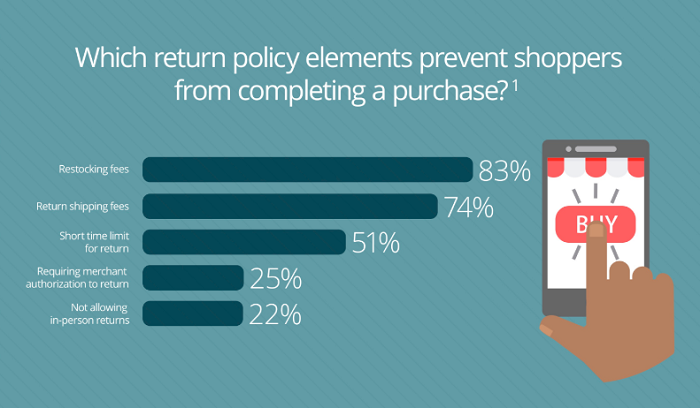
eCommerce retailers should ditch the idea that having a return policy will only hurt their bottom line. Truth is, establishing the right process that fits your business model while providing a hassle-free experience is a great way to build trust with your customers. 92% of customers who were happy with the returns process say that they are more likely to purchase again, which will ultimately increase the lifetime value of that customer.

Creating a return policy for your eCommerce business
There is no one-size-fits-all when it comes to a return policy. However, there is one rule: keep it simple and easy to understand.
Good return policies are designed to assist, not confuse.
A good return policy typically contains the following:
- How to start or initiate a return/exchange
- How many days after purchase can a customer start a return
- How long is the return processing
- How long until they receive their refund
- What things need to be included to complete the return.
- Who pays for the cost of shipping.
- In what condition can an item be returned.
Turning your returns into a positive experience
Let’s face it, not all customers will be satisfied with your products. But failing to fix the problem by providing a seamless returns process, is the fast path to negative reviews. Here are some tips on how to turn a typically negative returns process into a positive experience for everyone.
1. Include a return label
To save time in handling returns, consider packing a return label with the shipment. It may feel like your shipping something that you’re expecting to get returned, but that’s not the case. What you’re doing is providing your customers with a frictionless experience should the product not meet their expectations.
2. Avoid asking for additional fees
Think you’ll recover some of your lost profit by charging a “restocking” fee? Think again. These fees leave a bad taste and cost a business way more than they make. Studies have shown a whopping 79% of customers who are charged these fees won’t be returning. Returns should be included in the cost of doing business. Minimize returns them by setting correct expectations with your customers.
3. Speed up the returns process
Don’t wait weeks to work them, get on returns as soon as they come in. Doing so shows you care about your customers and when a customer feels loved, they’ll come back.
4. Keep customers updated during the process
Let customers know about the status of their returns by providing them with tracking information or an automated email informing them that their returned item has reached your warehouse. Set realistic and correct expectations throughout the entire process. These “personal” touches can make all the difference in the world.
5. Don’t hide it
Big-box retailers and major marketplaces have already set expectations. So be sure to include the return policy in the footer of your website.
Tips to reduce returns
1. Offer other options
Instead of giving a full refund, why not offer an exchange or store credit on their next purchase? A store credit not only keeps the customer happy, it ensures they’ll be coming back to make another purchase.
2. Conduct product testing
Dropshipping and noticing an influx of returns? Consider making a purchase yourself and see why your customers are not satisfied with the product. Remember, dropshipping is a great way to start a business, but you could end up sacrificing product quality that could adversely affect your brand.
3. Provide precise product description
Unlike brick and mortar, your online store doesn’t have a salesperson helping out with the purchase. Therefore it’s imperative you write detailed and compelling product descriptions. If it’s a mid-market product, don’t sell it as a luxury item. Set the correct expectations upfront and you won’t get many returns on the backside.
4. Double-check orders before shipping
Double-check each and every shipment that leaves your facility. Add a note from the second set of eyes letting them know this shipping has been packed and visually inspected for accuracy. In the note, let them know that mistakes happen and if they notice any issue, please reach out so you can rectify the situation immediately.
5. Check your packaging
20% of online orders are returned due to products being damaged in transit. Work with reputable carriers and make sure your items are packed correctly. You’ve got the sale, is packing really the place you want to save a couple of extra cents?
6. Evaluate common issues in returned items
After processing the returns, ask your customers to fill out a short survey. That survey will help you figure out why those returns happened in the first place and you’ll know which areas you need to improve to avoid it from happening again.
7. Be transparent
Be honest and upfront about your return policy. If they’re going to shoulder the cost of restocking/returning the items, let them know before they begin the return. This shows credibility, integrity, and honesty. All traits that build a solid foundation for a profitable relationship.
Conclusion
Returns are going to happen, so be sure to use it as an opportunity to show your customers they matter to you. True, you might lose a couple of bucks in the short-term, but the long term value these satisfied customers will provide will keep the revenue flowing for years to come.

Noah has been helping companies navigate eCommerce complexities for the last couple of years. While fluent in social media and SEO, he gravitates towards the more technical aspects of managing an eCommerce store. When not helping business grow, he enjoys spending time with his family and 2 kids.