

Deprecated: wp_make_content_images_responsive is deprecated since version 5.5.0! Use wp_filter_content_tags() instead. in /home/blogmypinnacleca/public_html/wp-includes/functions.php on line 5213
Deprecated: wp_make_content_images_responsive is deprecated since version 5.5.0! Use wp_filter_content_tags() instead. in /home/blogmypinnacleca/public_html/wp-includes/functions.php on line 5213
Deprecated: wp_make_content_images_responsive is deprecated since version 5.5.0! Use wp_filter_content_tags() instead. in /home/blogmypinnacleca/public_html/wp-includes/functions.php on line 5213
There’s no denying it — producing valuable content with SEO in mind is a great way to improve your eCommerce website’s performance in search results and grow your organic traffic (in terms of quantity and quality/relevancy).
But to make your valuable content work for you, you need a solid strategy.
The question is, what exactly makes for a good eCommerce content strategy? And how do you get started building one?
Read this quick yet actionable guide to learn specific ways to skyrocket your eCommerce traffic with a strong content strategy.
Why a content strategy will grow your website traffic
A good content strategy lies at the heart of growing your organic traffic, no matter your niche. Churning out content without a strategy is equivalent to mixing up some words and visuals, hoping for the best, and adding to the valueless branded content noise on the internet.
Alternatively, a solid content strategy can drive real results for your business, with benefits such as:
- More traffic to your eCommerce product pages
- Better brand visibility on search engines and across the social web
- Greater credibility and brand authority, encouraging conversions and retention
Put simply; you need to tie your content marketing efforts to a clearly defined purpose with measurable goals — like going from 10K to 100K monthly visitors in 8 months. For this goal, you’ll need to devise a content strategy.
So, how do you do that? Let’s take a look at the…
Attributes of a good content strategy
An effective content strategy comprises the right multi-channel marketing mix. And the one “thing” that will make your strategy work well is how each of those individual attributes is complementary — which means they work together to present a united vision.
Here are the six key attributes that make up a solid, traffic-driving eCommerce content strategy.
1. A blog
It’s 2022, and unless you just arrived on earth, you’re aware of the importance of maintaining an active business blog.
In fact, according to a recent benchmark report, blogging drives 6% of eCommerce sales (and doubles to 12% for brands that blog regularly for 6+ months).
But putting out shallow 500-word blog posts on random topics doesn’t work anymore. To make your blog stand out and rank on the first page of Google, you must:
- Research your competitors to see their best-performing content and identify gaps you can fill in your content
- Survey your audience to learn about their biggest challenges and pain points, and address those in your blog articles
- Dive deeper into each topic than your competitors to publish comprehensive long-form articles that answer all questions your readers might have
- Conduct keyword research to target the right keywords in your content for better rankings on search engines
- Add Call-To-Action (CTA) links to your product pages from your blog
If you haven’t already, start a blog and implement these best practices immediately!
2. Social media profiles
With your blogging game going strong, don’t overlook another powerful content marketing channel — social media.
Today, you have countless social media channels to promote your content and products on. Start by pinpointing where your target audience spends most of their time, and focus only on those channels.
Instagram, in particular, is one platform you need to leverage and build your brand’s presence. Here are a few tips to increase Instagram followers and authority:
- Create bite-sized videos to post as Reels
- Link to your eCommerce product/content page in the bio
- Post high-quality product photos with relevant hashtags
- Showcase your team’s behind-the-scenes
- Jump on trends and use trending audio
- Team up with complementary brands to expand your reach
- Host live streams (shopping, QnA, AMA, etc.)
- Encourage and repost user-generated content
- Take inspiration from competing brands
Apart from Instagram, promote your blog content on Pinterest and Twitter, and if you’re B2B, leverage LinkedIn.
3. Guest posts
Without backlinks from high-quality websites, it’s impossible to get your most important content and product pages to rank on the first page of Google (and thus, skyrocket traffic).
One of the best ways to earn quality backlinks is by guest posting — a content collaboration tactic wherein you create content for relevant publications in your niche. It usually involves reaching out to the publisher with an email pitch, suggesting topic ideas that benefit their audience, and then creating an article as per their editorial guidelines. You can include a contextual link to your blog or a product page in the content.
It’s a win-win because the publication benefits from fresh content. At the same time, your brand gets exposure to wider audiences, builds thought leadership, and earns direct traffic from the content along with a backlink that helps your Google rankings.
4. PPC campaigns
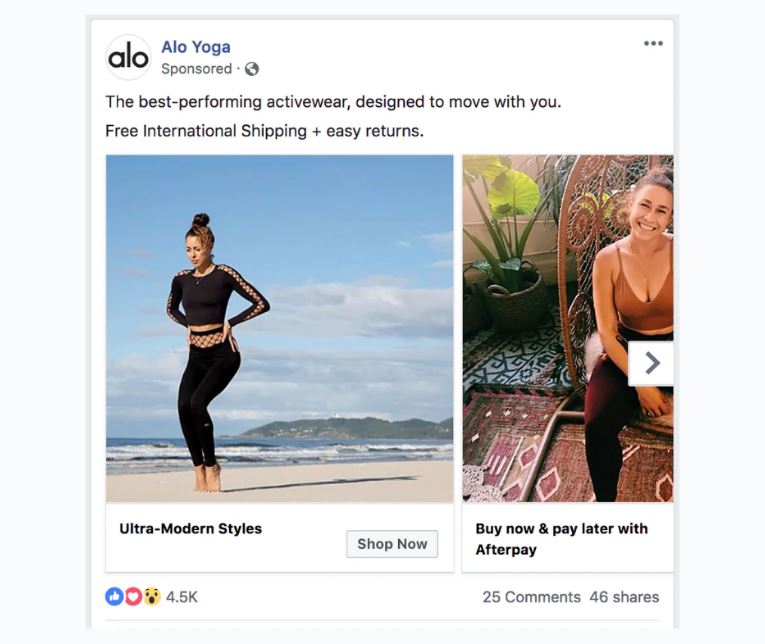
If you want an immediate bump in your website traffic, running pay-per-click (PPC) ads on Google or social media platforms like Facebook and Instagram is the way to go.
Based on your strategy and goals, you can run ads to drive traffic to your most valuable content pages (such as long-form how-to guides) or your most popular/newly-launched product pages.
Either way, the high-level steps involved in a paid marketing campaign include deciding your budget, researching keywords, crafting the ad copy and visuals, and launching your ad.
To set up an effective Google Ads campaign, check out this great guide. And to succeed with Facebook ads, go through this comprehensive post.
5. Original images, videos, webinars, and events
As you know, the biggest problem with selling online is the lack of the ability to touch and try the products.
The best way to minimize that friction and reassure customers is with strong visual content in the form of:
- Original product images. It goes without saying that you need high-quality photos of your products from multiple angles.
- Infographics. These can be data-driven graphics covering topical trends (such as make-up trends if you’re a beauty brand), the latest industry statistics, or a quick step-by-step guide (such as how to set up a tent, if you’re a camping store).
- Video. Produce videos to quickly explain your product’s usage, benefits, and features, or provide general tips to help customers make the most of your products.
- Webinars and events. Cover the latest happenings in your industry and provide product demonstrations by running webinars and virtual events.
- Branded brochures and pamphlets. These help leads learn more about your brand. For inspiration, try these tri-fold brochure templates.
Optimize your images and videos with relevant keywords and promote them across your social media channels to drive more traffic to your eCommerce store.
6. Lead magnets
If you wish to build your email marketing list and drive repeat traffic, a great tactic is to create exclusive gated content to incentivize people to sign-up to your email list.
This exclusive resource is also known as a lead magnet. It could be anything from whitepapers and eBooks to definitive step-by-step guides and templates. For eCommerce, you could also offer exclusive discounts/coupon codes to incentivize visitors to give you their email addresses.
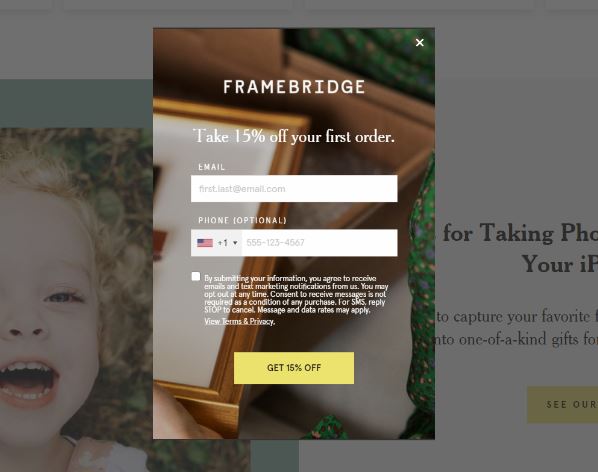
Source: Framebridge
How to build your strategy
Now, let’s take a quick look at the steps you can take to get started with your eCommerce website’s content strategy.
Step 1. Identify keywords and topics
To create content that ranks, including the right keywords is crucial. Use a keyword research tool like SEMrush to identify relevant keywords and conduct a competitive analysis to find keyword gaps, along with opportunities to create content against new search terms.
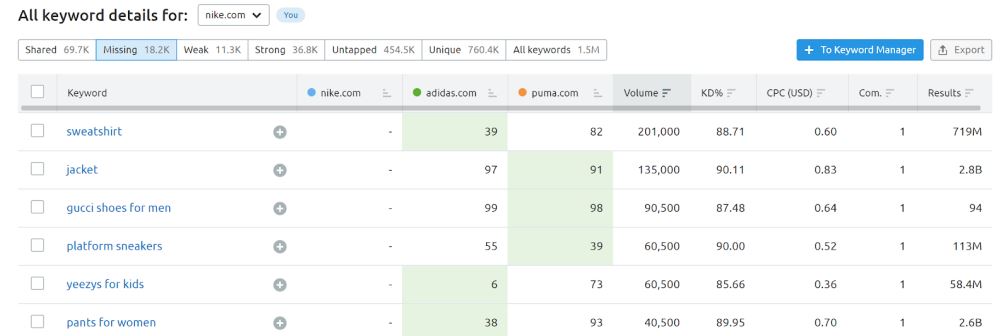
Source: SEMrush
Furthermore, use a topic research tool to analyze your competitors’ content, learn what questions your audience asks, and get ideas for strong content that resonates with your visitors.
Step 2. Craft content and adapt it for each platform
With the topics and keywords ready, it’s time for you (or your content team) to create. Here are some best practices for this step:
- Focus on readability and structure, including keywords naturally
- Opt for a conversational tone and include plenty of images
- End each post with a strong call to action that directs readers to a relevant product page or catalog. Check out these call-to-action examples for inspiration.
- Try to cover each topic more thoroughly than your competitors’ content
Step 3. Publish and re-evaluate
Once your content is ready and proofread, it’s time to hit publish!
But don’t expect much traffic without a ton of explicit promotion. Share your content on all your marketing channels — in your email newsletter, social media, via guest blogging, etc. — to drive traffic and initial traction. Speaking of social media, it’s a good idea to craft a social media calendar and schedule your social media posts so you don’t have to do it manually each time.
Also, eCommerce website content creation is an ongoing process, so evaluate your content’s performance in Google Analytics to know what works best for driving traffic (both organic and referral).
Make that traffic jam
So you’re getting good traffic in. What’s next?
Ensure your visitors have a sweet time in their browsing session on your store — intuitive site navigation, blazing-fast page load speeds, crisp product images, social proof, seamless navigation, etc. — focus on these pivotal aspects of a great eCommerce user experience to build credibility, engage those visitors, and keep them coming back for more.
It’ll take some consistent work to gain traction with your content strategy and marketing efforts, but your investments will be well worth it once you see that traffic snowballing.
Mark Quadros is a SaaS content marketer that helps brands create and distribute rad content. On a similar note, Mark loves content and contributes to several authoritative blogs like HubSpot, CoSchedule, Foundr, etc. Connect with him via LinkedIN or twitter.